There’s a persistent idea that meditation involves sitting perfectly still, emptying your mind and somehow becoming wonderfully peaceful while the rest of the world carries on. It sounds lovely, until you actually try it. You’ve barely settled when you remember the washing needs hanging out, your nose starts itching and suddenly you’re thinking about something embarrassing you said twelve years ago. But having thoughts doesn’t mean you’re doing it incorrectly. Our minds think, and in many mindfulness practices meditation is about noticing where attention has wandered and gently bringing it back. Five minutes is a perfectly good place to begin.
Finding your little place of peace
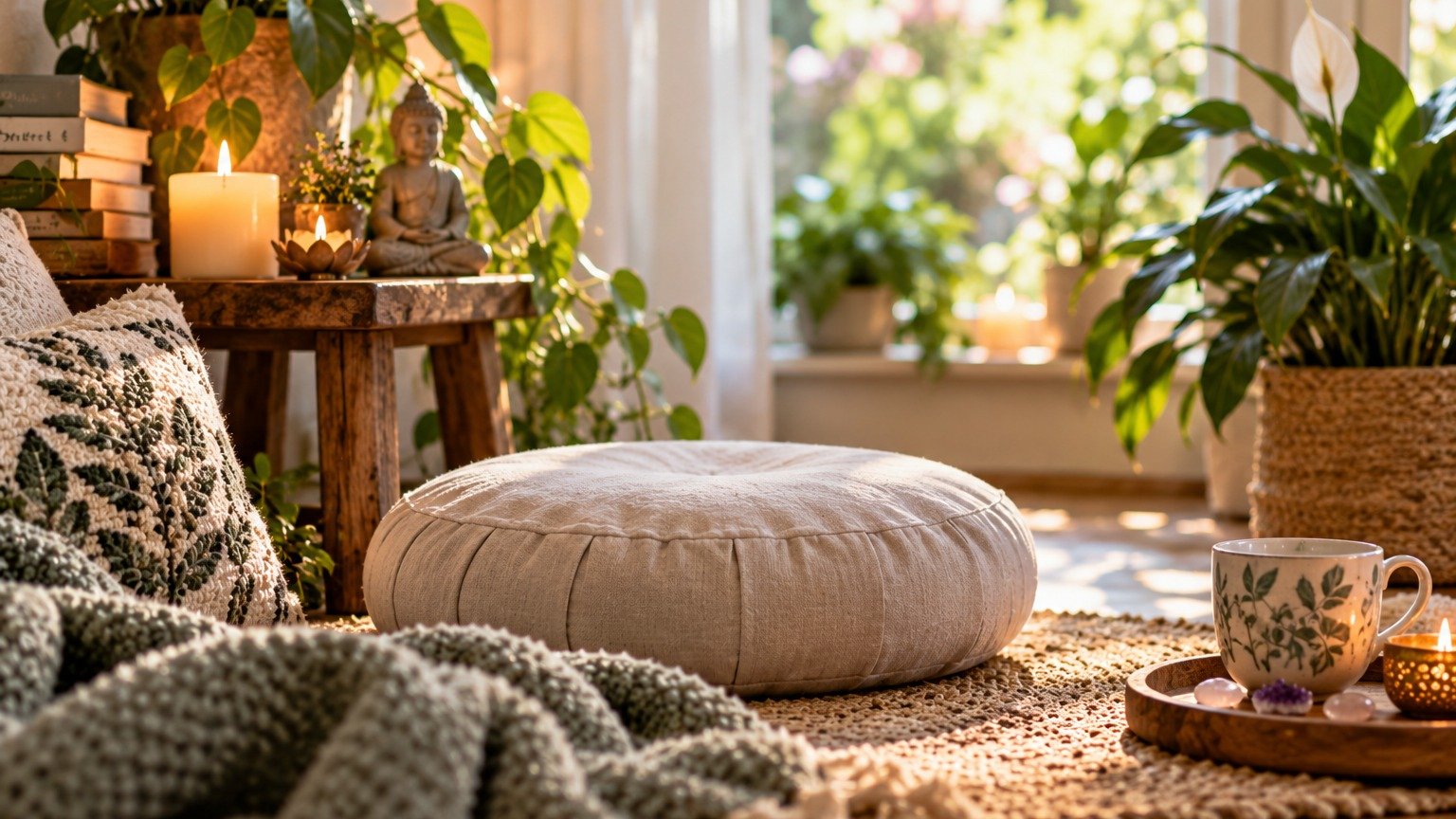
You don’t need a dedicated meditation room, an expensive cushion or a collection of singing bowls. All you need is an armchair beside a window, a quiet corner of the bedroom or a favourite spot on the verandah where you can hear the birds. Settle somewhere comfortable, with your feet supported if you’re sitting in a chair and your hands resting naturally. You might soften the light, bring a favourite crystal nearby or set a gentle five-minute timer, but none of those things are required. The practice happens through the attention you bring to the moment, not through the objects around you.
Your first five minutes
Begin by noticing how your body feels in the chair. Feel the support beneath you and the contact of your feet with the floor. If your shoulders or jaw are tense, see if they can soften a little without forcing them. Now bring your attention to your natural breathing. There is no need to take enormous breaths or follow a complicated pattern. Notice the air moving through your nose or the slight rise and fall of your chest. Choose whichever sensation feels easiest to follow. Imagine the movement of each breath like a little wave washing onto the shore and drifting away again, arriving and leaving without effort. Before long, you’ll probably start thinking about something else, an email you haven’t answered or the wonderful idea that today is the day to reorganise the pantry. When you realise attention has wandered, quietly acknowledge the thought and return to your breath. Think back to your breath if that helps. If your thoughts wander twenty times, you’ve simply had twenty chances to practise returning. You may also become aware of birdsong, the wind or someone moving about in another room. There’s no need to shut those sounds out; notice them and bring your attention back to your chosen point of focus. If breathing feels uncomfortable to concentrate on, you can use the contact of your feet or the sounds around you instead.
When the timer sounds, don’t feel obliged to jump up immediately. Notice how you feel, move your fingers and allow your attention to return to the room. You might be calmer, or your thoughts might still be lively. Either experience is fine. You’ve spent five minutes practising the simple act of noticing and returning, and that’s enough for beginning a peaceful practice.
What if you can’t sit still?
Not everybody enjoys sitting quietly with closed eyes. Some people prefer to keep their gaze resting on a plant or the view through the window. Others like a guided recording, where a voice gives their attention somewhere to go. Walking meditation can be lovely too: take a slow wander through the garden and notice one foot meeting the ground, then the other. When your thoughts wander, come back to that easy rhythm of movement. A minute or two is also a perfectly good starting point. There’s no prize for sitting the longest.
Does meditation always feel peaceful?
Not necessarily. Sometimes quiet sitting feels soothing, and sometimes it makes you more aware of tiredness, restlessness or emotions you’ve hardly noticed during the day. There’s no need to push through an experience that feels uncomfortable. Open your eyes, shift your attention to the room or stop for now. Meditation can be explored with curiosity rather than treated as another expectation you must live up to.
Making five minutes your own
You may enjoy a little quiet before breakfast, a pause beside an open window late in the afternoon or a few minutes after dinner when the house begins to settle. If you miss a day or an entire week, there’s nothing to catch up on. Your chair will still be waiting. Over time, you’ll become curious about guided visualisations, walking meditation or spiritual traditions that offer different approaches to stillness. There’s a world to explore, but you don’t need to rush into it. Five minutes is a lovely beginning.
Recommendations
This guide may direct you to Holistic Living Resources. Affiliate links are identified within the recommendation.